

A community dedicated to gathering, nurturing, learning and building.
Central Corridor: Mill Creek Valley & Midtown
Josephine Baker home (1)
Gratiot Street near Targee Street
Open to public / Not Open to public
Not open to public - DISPLACED
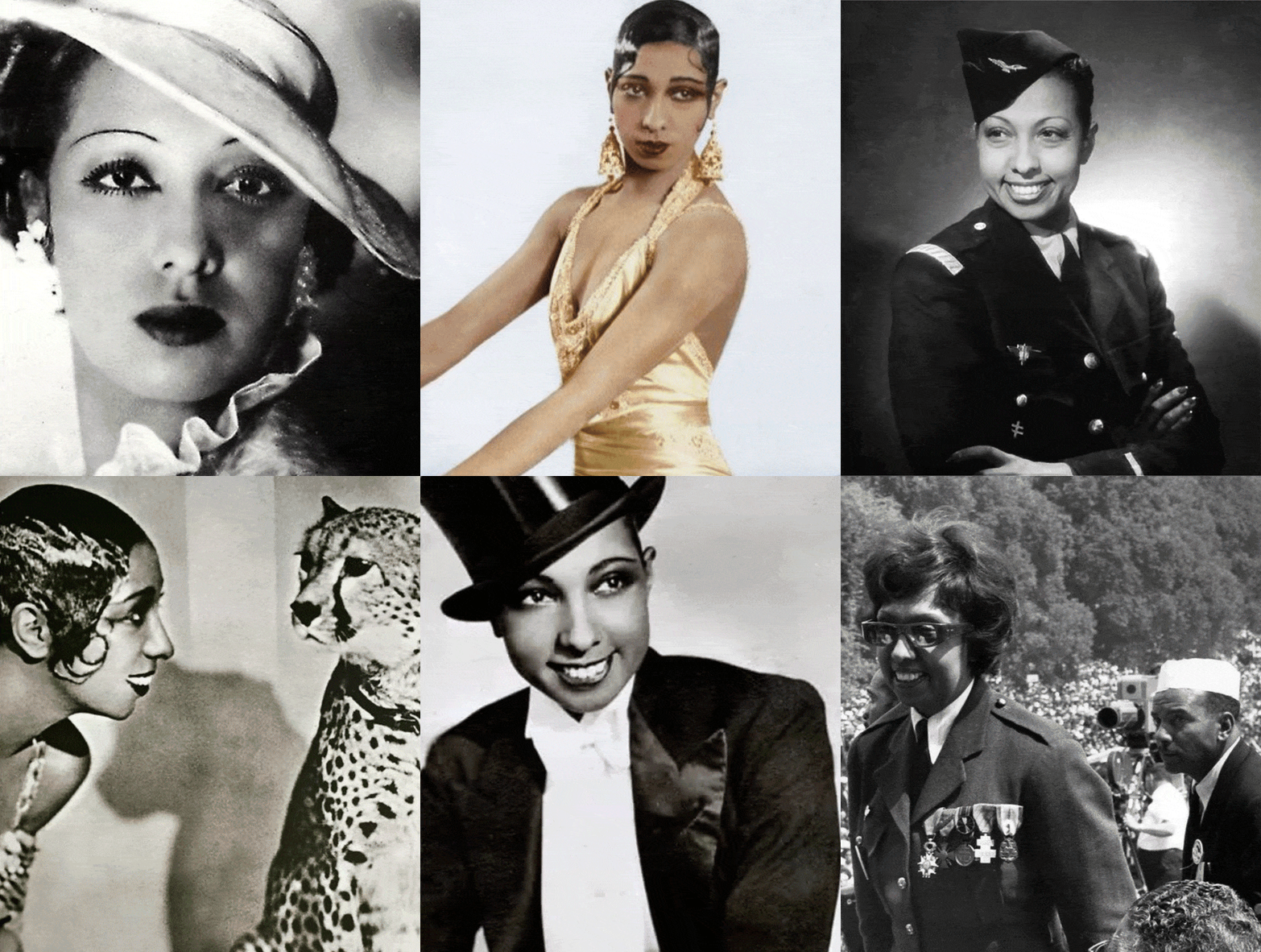
Josephine Baker (1906–1975) was born in St. Louis’s Mill Creek Valley and raised on Gratiot Street and later at 2632 Bernard Street. She attended Lincoln Elementary School and began performing on the streets for pennies outside the Booker T. Washington Theatre. Over time, she joined her family’s vaudeville act and eventually performed in local musical shows.
Frustrated by the racism and limited opportunities she faced in St. Louis, Baker left the city as a teenager. By 1921, she was performing in New York in an all-Black musical revue written by Eubie Blake and Noble Sissle. Just four years later, she rose to international fame in Paris as the star of the Folies Bergère, where her daring performances and magnetic stage presence captivated European audiences.
But Baker was much more than an entertainer. During World War II, she worked with the Free French Army as an ambulance driver and intelligence agent. For her wartime service, she received France’s highest military honor, the Croix de Guerre.
She also became a powerful voice against racism. Baker adopted 14 children from different racial and national backgrounds, calling them her “Rainbow Tribe,” as a living example of racial harmony. When she returned to the U.S. in 1951, she rejected a $12,000-per-week offer to perform at the Chase Hotel in St. Louis because the venue refused to allow integrated audiences.
Instead, in February 1952, Baker appeared for free at a desegregation rally at Kiel Auditorium, which drew over 6,000 attendees. The event, organized by the NAACP and the Teamsters Union, demanded the end of segregation in St. Louis public schools, particularly in response to the severe overcrowding in Black schools.
Josephine Baker remains an enduring symbol of artistic brilliance, global activism, and unshakable resistance to racial injustice.
SOURCE: The historical information presented on this page is adapted with permission from Discovering African American St. Louis: A Guide to Historic Sites by Dr. John A. Wright, Sr. We are honored to share his invaluable research and historical insights, made available through the generous consent of Dr. Wright and the Missouri Historical Society Press. Their dedication to preserving and celebrating the rich legacy of Black St. Louis is a gift to our community—a testament to those who came before us and a guide for those who walk the path forward.

COMMUNITY CONTACT
No affiliations
Gratiot Street near Targee Street
OTHER SOURCES
ADDITIONAL RESOURCES COMING SOON!


