

A community dedicated to gathering, nurturing, learning and building.



St. Louis is home to Black Heritage, Culture and Ancestry. With our collective knowledge, we will become more familiar with protecting our heritage and historical research to trace the known, and unknown, aspects of our lineages.
Connecting with this history can provide guidance and support in our everyday lives and propel the mission to improve education for all. Awareness of our culture, past and present, and the cultures around us, is an effective societal solution for building community. Together, we are investing in a community dedicated to gathering, nurturing, learning and building.


YOUTH EDUCATION
Transferring this knowledge is crucial for the development of our future generations. By providing all youth with educational resources, we can equip them with the necessary skills and knowledge to succeed, and ensure that every child has access and the opportunity to reach their full potential.
Reminding youth of the proximity of their origins and the gifts that were inherited from their ancestors is another powerful healing technique. These gifts, along with innovations, medicines, foods, plants and sacrifices are connected by bloodline, are birthrights and are a part of our St. Louis heritage.


Study Guides


ⓈⓉⒺⒶⓂ
A valuable resource is within our midst every day. Elder wisdom is an invaluable social support system for community history. Their eyewitness accounts should be listened to and documented.
As we begin to capture their narratives, as well as see how tragically tedious it is to trace lineages, opportunities for creating a sustainable digital repository can be explored. By building on existing data, and adding our own, we will be able to make this process easier for future members of the community and their descendants.

Books by Dr. John Wright
Books by Dr. John Wright
Books by Dr. John Wright
Books by Dr. John Wright
Books by Dr. John Wright
Books by Dr. John Wright
Making Missouri: Angela da Silva - Missouri Historical Society
Books by Dr. Wright

Search by Category or Topic
Search by Area or Neighborhood
EDUCATION

Closed in 2012 - now YouthBuild
This school was named for Arthur Mells Jackson (1883-1945), a prominent black citizen and educator and the district's second black board member. Jackson, a Georgia native and 1907 graduate of Morehouse College, was hired by the East St. Louis Board of Education in 1915. He taught Latin and coached basketball and baseball at Lincoln High School for 30 years. As the district's first football coach, he won 70% of his games.
A M Jackson School
East St. Louis
Open to public / Not Open to public
Open to public
RELIGION

See also St. Paul African Methodist Episcopal Church (Mill Creek Valley)
In 1841, Jordan Early and other members of the African Methodist Episcopal Church secured a small log cabin near the end of Main Street. The congregation later obtained a building from the Presbyterians at Seventh & Washington. By the late 1850s, it moved to Eleventh and Lucas. In 1852, Reverend Hiram R. Revels created a school to teach Black St. Louisans to read and write. During Reconstruction, he became the first African American to serve as a United States Senator. He filled the seat once occupied by Jefferson Davis, president of the Confederacy. In 1878, the church moved to Hamilton Avenue in Mill Creek Valley and became St. Paul AME Church.
African Methodist Church
Downtown St. Louis
Open to public / Not Open to public
Not open to public - DISPLACED
RELIGION

African Church, also known as the A.M.E. Church of St. Charles, is a historic African Methodist Episcopal church located at 554 Madison Street in St. Charles, St. Charles County, Missouri, United States. It was built about 1855, and is a small brick building with a low-pitched gable roof. The building was renovated in 1947 as a residence. It is designated a state landmark and placed on the National Register of Historic Places in 1982.
African Methodist Episcopal Church
St. Charles
Open to public / Not Open to public
Not open to public
🏠

Olympic legend Jackie Joyner-Kersee, often called the world’s greatest female athlete, grew up in a modest home in the Piggott neighborhood before it burned in 1986. A Lincoln High School graduate, she went on to win six Olympic medals in the heptathlon and long jump, becoming the first person in history to medal in a multi-event at three consecutive Olympic Games.
Al Joyner and Jackie Joyner Kersee childhood home
East St. Louis
Open to public / Not Open to public
Not open to public
RELIGION

All Saints Episcopal Church, the first Episcopal church in St. Louis for African Americans, was established in 1847 and began as a small mission known as the Mission of Our Savior at 1220 Morgan Street. In June 1875, the mission moved to a building at 6th & Sayre Streets and was renamed the Mission of the Good Samaritan. In 1883, the name was changed to All Saints Episcopal Church, and the congregation moved to a larger building at 22nd Street and Washington Boulevard. In 1906, the church moved again, this time to the former Messiah Unitarian Church at Garrison and Locust Avenue. As membership continued to grow, the church moved to its present location at 5010 Terry Ave in 1957.
All Saints Episcopal Church (3rd site)
The Ville, Northside, Riverview
Open to public / Not Open to public
Open to public
RELIGION

Allen Chapel and an affiliated school were established in 1876 by the Reverend William B. Hammond in a building that would later become the Dunbar School. In 1879, Hammond sold a piece of property in Upper Alton to his congregation. The present church building was completed in 1880. In the early 1940s, the structure was remodeled and covered with brick siding.
Allen Chapel AME Church
Alton
Open to public / Not Open to public
Not open to public - DISPLACED

CHARITABLE

The Annie Malone Children & Family Service Center first opened its doors in 1888 as the St. Louis Colored Orphan’s Home. Helping St. Louis families for more than a century, the agency today has grown into a multi-service center in the community, addressing social and education needs of children and families in crisis and at-risk throughout St. Louis.
Annie Malone Children & Family Center
The Ville, Northside, Riverview
Open to public / Not Open to public
Open to public
BUSINESS

Annie Malone was born in Illinois and orphaned shortly after. She was raised by her older sister in Peoria, Illinois. After seeing the damage made by using animal by products on hair she created her own hair products in her home in Brooklyn, Illinois. When she learned there would be a World's Fair in nearby St. Louis she decided to come here in 1902 to sell her products at the fair. However, the fair was delayed so she traveled through the South selling door to door. Upon returning to St. Louis, she took her newfound sales skills to the streets and to the local black press. By 1924, newspapers were reporting that she had become the First Black Female Millionaire, worth over $14 million.
Annie Malone first home and shop
Central Corridor: Mill Creek Valley & Midtown
Open to public / Not Open to public
Not open to public - DISPLACED
RELIGION

Antioch Baptist Church, established in 1878, stands as a historic pillar in St. Louis's Ville neighborhood. Its 1921 Gothic Revival building has long served as a spiritual and cultural hub for the African American community, earning a place on the National Register of Historic Places.
Antioch Baptist Church
The Ville, Northside, Riverview
Open to public / Not Open to public
Open to public
CIVIL RIGHTS

Archer Alexander (c. 1813–1880) was an enslaved man who became a symbol of courage and freedom during the Civil War era. After escaping enslavement in St. Charles County, Missouri, he found refuge in St. Louis with Unitarian minister William Greenleaf Eliot. Alexander's likeness was used for the Emancipation Memorial in Washington, D.C., unveiled in 1876. He spent his final years in St. Louis, where he passed away in 1880. His burial site at St. Peter's United Church of Christ Cemetery in Normandy, Missouri, is recognized by the National Park Service's Underground Railroad Network to Freedom.
Archer Alexander
Central Corridor: Mill Creek Valley & Midtown
Open to public / Not Open to public
Open to public
EDUCATION

Established in 1923 at the corner of Hanley Road and Bonhomme Avenue, Attucks School served as Clayton's second educational institution for African American children, offering classes from kindergarten through eighth grade. The school was closed in the 1950s during urban renewal efforts, and the building was subsequently demolished. Today, a historical marker commemorates its legacy at the original site.
Attucks Elementary School (Clayton)
Clayton, Richmond Heights, Frontenac, Brentwood
Open to public / Not Open to public
Not open to public - DISPLACED
EDUCATION
Attucks Elementary School, situated at 2436 Kansas Avenue in East St. Louis, Illinois, was part of East St. Louis School District 189. The school functioned as a special education institution until its closure in 2023. Following its shutdown, the facility ceased operations and is not accessible to the public.
Attucks Elementary School (Illinois)
East St. Louis
Open to public / Not Open to public
Not open to public
MUSIC

The old St. Louis County Courthouse, completed in 1878, was connected to the adjacent jail by a second-floor corridor known as the Bridge of Sighs, where executions were carried out. In July 1894, Harrison Duncan, an African American man, was hanged from this bridge for allegedly killing police officer James Brady.
Ballad of Brady & Duncan
Downtown St. Louis
Open to public / Not Open to public
Not open to public - DISPLACED
MUSIC

“Frankie and Johnny” is a traditional American folk ballad that tells the story of a woman named Frankie who shoots her cheating lover, Johnny. The song has deep roots in St. Louis, where versions of the tale circulated in the early 20th century. St. Louis’s vibrant musical culture helped popularize the story, which has been recorded by countless artists across genres, making it a lasting part of American folk and blues heritage.
Ballad of Frankie and Johnny
Central Corridor: Mill Creek Valley & Midtown
Open to public / Not Open to public
Not open to public - DISPLACED
MUSIC

The infamous legend of Stagger Lee (also known as Stagolee, Stack O' Lee, Stackerlee, Stackalee) is about a St. Louis carriage driver, gangster and pimp who gets into a dispute with his friend Billy DeLyon (also known as Billy the Lion or Billy Lyons) after losing his Stetson hat to Billy. It is often associated with Chestnut Valley, a once-thriving African American neighborhood and entertainment district in St. Louis during the late 19th and early 20th centuries.
Ballad of Stagger Lee
Downtown St. Louis
Open to public / Not Open to public
Not open to public
BURIAL GROUNDS

The 2.55 acre Ballwin Colored Cemetery is shown in the 1909 county atlas as the "African Cemetery." In 1989 the title to the property was deeded to the First Baptist Church of Ballwin by the trustees of the Baldwin Cemetery Company.
Ballwin Colored Cemetery
Ballwin, Chesterfield
Open to public / Not Open to public
Open to public
BURIAL GROUNDS

Incorporated in 1849, this is the final resting place of two prominent ministers: the Reverend John Berry Meacham (1818–54), pastor of the First African Baptist Church, and the Reverend John Richard Anderson (1818–63).
Bellefontaine Cemetery
The Ville, Northside, Riverview
Open to public / Not Open to public
Open to public

NEIGHBORHOODS
Billups Avenue, located in the Ville neighborhood, honors Kenneth B. Billups, a distinguished musician and educator who significantly influenced St. Louis's African American cultural scene.
Billups Avenue
The Ville, Northside, Riverview
Open to public / Not Open to public
Not open to public
BUSINESS

The Black Americans In Flight mural hangs in Terminal One (T1) at St. Louis Lambert International Airport (STL). The five-panel mural is eight feet tall and 51 feet long. It pays tribute to African-American Achievements in Aviation from 1917 onward.
Black Americans in Flight Mural
Kinloch, Berkeley, Ferguson, Robertson, Black Jack
Open to public / Not Open to public
Open to public
EDUCATION
Kirkwood High School (KHS) has a long, rich history that dates back to the founding of the Kirkwood School District in 1865. In 1865, the district rented space for Black high school and elementary students in a temporary building at Geyer and Adams. Later, in the Jefferson Avenue school, the District’s first formal school was opened in 1869. Night schools classes for adults were added in 1874-75. In 1888, the district built the Adams Avenue School next to the Jefferson School and offered a two-year high school program for students completing the elementary grades.
Booker T Washington Elementary School
Webster, Rock Hill, Crestwood, Kirkwood
Open to public / Not Open to public
ART

The Booker T. Washington Theater, located at 2248 Market Street at 23rd Street, operated from about 1920 to 1930. It was one of the first theaters in the United States built and operated by African Americans. With a seating capacity of 1,000, the theater featured vaudeville and other live entertainment, as well as motion pictures. Each week, a new show with a different theme was presented. The theater was part of the Black Vaudeville circuit, which was connected to the Theater Owners' Booking Association.
Booker T Washington Theatre
Central Corridor: Mill Creek Valley & Midtown
Open to public / Not Open to public
Not open to public - DISPLACED
NEIGHBORHOODS

In the early 1900s, African American families began moving into central St. Louis County, settling in Clayton (the county seat), Brentwood, and Richmond Heights, to work in brickyards and serve affluent households. Smaller communities also took root in Pagedale and Breckenridge Hills. As these populations grew, they built their own homes, businesses, churches, and schools, forming largely self‑contained neighborhoods.
Brentwood
Clayton, Richmond Heights, Frontenac, Brentwood
Open to public / Not Open to public
Not open to the public - DISPLACED
EDUCATION

Cardinal Ritter College Preparatory High School is a Catholic, coeducational institution in St. Louis, Missouri, dedicated to empowering primarily African American students through academic excellence, faith development, and leadership. Established in 1979 and named after Cardinal Joseph Ritter—a pioneer in desegregating Catholic schools—the school fosters a nurturing environment where students are "Aspiring, Inspiring – Empowered for Life."
Cardinal Ritter College Preparatory High School
The Ville, Northside, Riverview
Open to public / Not Open to public
Open to public
EDUCATION
Carver House opened in 1939 in a Bell Avenue Mansion though its origins can be traced to an earlier social center founded by the Wesley House Association in 1919.
Carver House Community Center
Central Corridor: Mill Creek Valley & Midtown
Open to public / Not Open to public
Not open to public - DISPLACED
RELIGION

Centennial Christian Church (Disciples of Christ) is a historic congregation located at 4950 Fountain Avenue in St. Louis’ Fountain Park neighborhood. Founded in 1904, the church has been a cornerstone of community service and activism. In May 2025, the church building was severely damaged by a tornado, but the congregation remains committed to rebuilding and continuing its mission of hunger, housing, and healing.
Centennial Christian Church
North Central City
Open to public / Not Open to public
Not open to public - TEMPORARILY CLOSED
HEALTH

Located at 4411 North Newstead Avenue in St. Louis, Missouri, this historic facility has served various community health and support roles over the decades. Originally opened in 1925 as Christian Hospital, it has since housed organizations such as the Hopewell Center, Grace Hill Health Center, and the Prince Hall Family Support Center, providing essential medical, mental health, and social services to the local community.
Central Medical Center
The Ville, Northside, Riverview
Open to public / Not Open to public
EDUCATION

Turner Open Air School is in the heart of The Ville neighborhood, just north of Tandy Park. The school was named for scientist and educator Charles Henry Turner (1867-1923).
Charles Henry Turner Open Air School
The Ville, Northside, Riverview
Open to public / Not Open to public
Not open to public
CIVIL RIGHTS

Charlton H. Tandy (1836–1919) was a prominent African American civil rights activist, military officer, and public servant in St. Louis. Born free in Lexington, Kentucky, Tandy moved to St. Louis in 1857, where he became a leading figure in the fight for racial equality. His legacy is honored through Tandy Park and the Tandy Community Center, located at 4206 Kennerly Avenue, St. Louis, MO 63113. These landmarks commemorate his lifelong dedication to civil rights and community advancement.
Charlton Tandy home
North Central City
Open to public / Not Open to public
Not open to public
NEIGHBORHOODS

Chestnut Valley was a vibrant African American neighborhood in downtown St. Louis, centered around Market Street, Targee Street (now part of Chestnut Street), and Jefferson Avenue. Flourishing from the late 19th century into the early 20th century, it was a hub for Black culture, entertainment, and commerce during an era of racial segregation. The district was home to numerous saloons, gambling houses, and brothels, many of which featured live music.
Chestnut Valley
Downtown St. Louis
Open to public / Not Open to public
Not open to public - DISPLACED
MUSIC
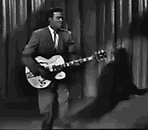
Chuck Berry's former residence at 3137 Whittier Street in St. Louis is a modest brick house where the rock 'n' roll pioneer lived from 1950 to 1958. During this period, Berry composed and recorded some of his most iconic songs, including "Johnny B. Goode" and "Maybellene." The house, now vacant and in disrepair, is owned by the City of St. Louis, which is seeking to restore it as part of a cultural district honoring Berry's legacy.
Chuck Berry home
The Ville, Northside, Riverview
Open to public / Not Open to public
Not open to public
HEALTH

City Hospital No. 2 was established in 1919 at 2945 Lawton Avenue in the Mill Creek Valley neighborhood of St. Louis. Housed in a former medical college building, it served as the city's primary hospital for African American residents during an era of racial segregation in healthcare. The hospital also functioned as a training ground for Black physicians and nurses. Despite its critical role, the facility faced overcrowding and deteriorating conditions, leading to its closure in 1937 with the opening of Homer G. Phillips Hospital.
City Hospital #2
Central Corridor: Mill Creek Valley & Midtown
Open to public / Not Open to public
Not open to public - DISPLACED
NEIGHBORHOODS

Clamorgan Alley, originally called "Commercial Alley," is named for Jacques Clamorgan (?-1814), a West Indian native who arrived from France to St. Louis in the 1780s and became a wealthy fur trader and landowner. Clamorgan fathered several children with free and enslaved Black women, including Cyprian Clamorgan, author of The Colored Aristocracy of St. Louis. The alley stands as a reminder of the complex and often contradictory legacy of race, power, and family in early St. Louis.
Clamorgan Alley
Downtown St. Louis
Open to public / Not Open to public
Open to public
NEIGHBORHOODS

African Americans, along with English, German, French, and Irish settlers, were early residents of the Hill section of St. Louis, now known as the city’s main Italian neighborhood. Starting around 1880, Black workers came to the area to labor in clay mines and later in terracotta and brick industries along nearby railroad tracks. Two key African American community centers formed around Patterson Avenue Church (organized in 1897) and a Pentecostal Church, with over 300 Black laborers employed in local factories by 1890.
Clay mines of the Hill
South St. Louis, Carondelet, South County
Open to public / Not Open to public
Not open to public
NEIGHBORHOODS

In the early 1900s, African American families began moving into central St. Louis County, settling in Clayton (the county seat), Brentwood, and Richmond Heights, to work in brickyards and serve affluent households. Smaller communities also took root in Pagedale and Breckenridge Hills. As these populations grew, they built their own homes, businesses, churches, and schools, forming largely self‑contained neighborhoods.
Clayton
Clayton, Richmond Heights, Frontenac, Brentwood
Open to public / Not Open to public
Not open to public - DISPLACED
RELIGION

Clayton Missionary Baptist Church was organized on Brentwood Blvd. in Clayton, MO 12 years later, the 67 member church, then located in a small shingle building surrounded by open fields called. the Reverend WL Rhodes as its pastor. He served the church for 68 years. The congregation built a new building in 1907. In 1961, the church relocated to 2801 N Union Blvd.
Clayton Missionary Baptist Church
The Ville, Northside, Riverview
Open to public / Not Open to public
MUSIC

The Club Imperial was a nightclub at 6306-28 West Florissant Ave in St. Louis, Missouri. During the club's heyday in the 1950s through the 1960s, acts such as Ike & Tina Turner, Chuck Berry, and Bob Kuban and the In-Men performed at the Club Imperial. The Club Imperial was owned by George Edick who turned the nightclub into a private hall in the 1970s. In the last few decades, the building went through different ownership and was almost demolished in 2018, but preservationists fought to save the site of the historic music venue.
Club Imperial
North Central City
Open to public / Not Open to public
Not open to public
HEALTH

Originally called the East St. Louis Senior Citizen Building, the center was renamed after the death of Clyde C. Jordan Sr. in 1987. Jordan, a respected newspaper publisher, philanthropist, and community leader, served as East St. Louis Township Supervisor and president of the East St. Louis School District 189 Board.
Clyde C Jordan Senior Citizen Building
East St. Louis
Open to public / Not Open to public
SPORTS

The Clyde C. Jordan Stadium was built in 1991 as an athletic facility shared by Lincoln High School and East St. Louis Senior High School. One of the primary teams using the field is the East St. Louis Flyers football team, which has long been a source of pride in the community.
Clyde C Jordan Stadium
East St. Louis
Open to public / Not Open to public
Open to public
EDUCATION

Cole Elementary School opened in 1931. It was renamed for Richard H Cole, a public school teacher and principal at Simmons Elementary School in St Louis for 50 years. Born in Cincinnati, Cole lived at 4210 West Belle Place in St Louis.
Cole Elementary School
Central Corridor: Mill Creek Valley & Midtown
Open to public / Not Open to public
EDUCATION

Colored School No. 1 opened at 5th and Gratiot; No. 2 operated at 10th and Chambers and in the Chambers Street Baptist Church; and No. 3 was located at 24th and Morgan. These early schools frequently changed locations. For example, in 1868, Colored School No. 3 moved to 14th and Christie, and again in 1880 to 11th Street between Carr and Biddle, before closing in 1881.
Colored School # 1 - Dumas Elementary School
Central Corridor: Mill Creek Valley & Midtown
Open to public / Not Open to public
Not open to public - DISPLACED
EDUCATION
Established in 1877 as Cheltenham Colored School, later known as Vashon Elementary, this institution served African American children in St. Louis until its closure in 1908.
Colored School # 10 - Vashon Elementary School
South St. Louis, Carondelet, South County
Open to public / Not Open to public
Not open to public
EDUCATION
Aldridge Elementary School, then called Baden Colored School, opened in a 2 room building on the site during the late 1870s. In 1890, the school was renamed for Ira Aldridge. It closed in 1908.
Colored School # 11 - Aldridge Elementary School
The Ville, Northside, Riverview
Open to public / Not Open to public
EDUCATION
Colored school #12 also known as Arsenal Colored School, was opened in 1880 at Columbus and Barry Streets in the present day La Salle Park area. In 1885, the school had moved to 7th and Hickory St. Five years later it was renamed for Crispus Attucks, believed to be a runaway slave who was killed by the British at the Boston Massacre. The school closed at this location by 1910.
Colored School # 12 - Arsenal
South St. Louis, Carondelet, South County
Open to public / Not Open to public
Not open to public


EDUCATION

In in 1870, the Saint Louis Board of Education authorized the school administration to rent one room in Carondelet for African American students. But rented quarters proved hard to find, so in 1873 Colored School #6 was built at 5th and Market Streets, (now Virginia Ave. and Bowen St.)
Colored School # 6 - Martin Delaney School
South St. Louis, Carondelet, South County
Open to public / Not Open to public
Not open to public

EDUCATION

see Simmons Elementary School; Simmons School, originally known as Colored School #8, opened on May 19, 1873, in the Ellardsville area. First housed in a small two-room wooden building, the school served Black children during the post-Civil War era and was run by the Board of Education for Colored Schools. Renamed in 1891 to honor educator Edward J. Simmons, the school continued to evolve, with a brick building replacing the original in 1899 and a new facility constructed on the same site in 1930. Located at 4318 St. Louis Avenue, the school stands as a testament to the legacy of Black education in St. Louis.
Colored School # 8 - Elleardsville
South St. Louis, Carondelet, South County
Open to public / Not Open to public
Not open to public
EDUCATION

This 120 seat school opened in 1877 as Colored school #9 at Bellefontaine Road and O'Fallon Ave. in North Saint Louis. By 1885, the Garnet school had moved to Bulwer Ave. near Adelaide Ave. Portable buildings were added in 1906-07. The school closed in 1938.
Colored School # 9 - Garnet Elementary School
The Ville, Northside, Riverview
Open to public / Not Open to public
Not open to public
🏠

Richard “Dick” Gregory (1932–2017) was a pioneering comedian, civil rights activist, and author, born and raised in St. Louis. A graduate of Sumner High School, he used his national platform to challenge racism through humor and activism. In 1977, Wagoner Street was renamed Dick Gregory Place in his honor. The street runs between Dr. Martin Luther King Drive and North Market Street.
Dick Gregory Place
The Ville, Northside, Riverview
Open to public / Not Open to public
Open to public

Dr. H. Phillip Venable Memorial Park is one of Creve Coeur's busiest parks. Spanning seven and a half acres, the park features a half-mile paved trail, three tennis courts, a soccer field, two playgrounds, a picnic pavilion, barbecue grills and seasonal restrooms. Dr. H. Phillip Venable Memorial Park was previously Beirne Park.
Dr. Howard P Venable Memorial Park
Creve Coeur, Elmwood, Overland, MH, Breckenridge
Open to public / Not Open to public
EDUCATION
The school, originally known as Glasgow School was built in 1912 as a whites-only elementary and middle school. As the demographics of the neighborhood changed, though, the then-superintendent of St. Louis Public Schools declared that the school would be turned into one for Black children in 1933. It was renamed in 1937 for Paul Laurence Dunbar a poet, novelist and short story writer.
Dunbar Elementary School
Central Corridor: Mill Creek Valley & Midtown
Open to public / Not Open to public
CIVIL RIGHTS
In July 1917, East St. Louis was the scene of one of the bloodiest race riots in American history. Tensions in the community had been increasing throughout the spring of 1917. The city's Black population had rapidly increased between 1910 and 1917, and white workers at local stockyards, packing plants, and factories resented the influx of cheap new labor.
East St. Louis Race Riots of 1917
East St. Louis
Open to public / Not Open to public
CIVIL RIGHTS

The warehouse of Godfrey, Gilman & Co. was situated at the foot of William Street near where the flour mill is located today. Broadway was a one lane street at that time called Short Street. The building was stone, three stories on the street side and four stories on the river side, which was a receiving point for goods brought to Alton by steamboats. Lovejoy had moved his abolitionist newspaper, The Observer from St. Louis to Alton anticipating a more friendly environment in the free state of Illinois.
Elijah Lovejoy assassination site
Alton
Open to public / Not Open to public
CIVIL RIGHTS

In 1879, thousands of impoverished Black men, women, and children, known as Exodusters, passed through St. Louis on their way to Kansas and other Midwestern and Western states in search of a better life. They fled the oppressive political, social, and economic conditions of the post-Reconstruction South, where former slaveholders had regained power and federal protections had been withdrawn.
Exoduster Migration
Downtown St. Louis
Open to public / Not Open to public
CIVIL RIGHTS

Benton Barracks ("Camp Benton") was established in August 1861 at Fairground Park (Vandeventer & Natural Bridge) and prepared thousands of Federal troops from the Midwestern states for active service. The facility could accommodate up to 30,000 recruits and hospital patients at a time.
Fairground Park
The Ville, Northside, Riverview
Open to public / Not Open to public
Open to public
🏠
Ferrier Harris Home for the Aged founded in 1902 as the Colored Old Folks Home moved to this site in 1943. A group of Black women known as the Women's Wednesday Sewing Club raised funds for the home which continues to provide facilities for senior citizens in the African-American community. The home is named for Rose Ferrier Harris, the club's first president. In 1993, it had 27 residents
Ferrier-Harris Nursing Home
Central Corridor: Mill Creek Valley & Midtown
Open to public / Not Open to public
RELIGION
First Baptist Church traces its origin to the First African Baptist Church organized in 1818. the church bought its present site in 1917 then later purchased the adjacent 4 family flat and converted it into an educational building. The church burned to the ground in 1940 and was reconstructed on the same site within 13 months.
First Baptist Church
Central Corridor: Mill Creek Valley & Midtown
Open to public / Not Open to public
RELIGION

First Baptist Church, the oldest Baptist church west of the Mississippi River, was founded in the early 1800s in what is now Ballwin, Missouri. Once a slave trading post, the land saw Black worshipers harassed by vigilantes, forcing them to meet in secret under grape arbors and iron pots. In 1832, a judge finally granted permission to build a church, marking a powerful moment of faith and resistance.
First Baptist Church of Ballwin
Ballwin, Chesterfield
Open to public / Not Open to public
Open to public
RELIGION

First Baptist Church of Chesterfield was organized in 1856 on land given by enslaver Mary Long. Though the church used the site from its founding, legal ownership was not transferred to the congregation until 1875. The current church building was completed in 1975 and originally served both as a church and a school.
First Baptist Church of Chesterfield
Ballwin, Chesterfield
Open to public / Not Open to public
Open to public
EDUCATION

The Floating Freedom School was an educational facility for free and enslaved African Americans on a steamboat on the Mississippi River. It was established in 1847 by the Baptist minister John Berry Meachum. After Meachum's death in 1854, the Freedom School was taken over by Reverend John R. Anderson, a former student, and closed sometime after 1860.
Floating Freedom School
Downtown St. Louis
Open to public / Not Open to public
NEIGHBORHOODS

Fountain Park is a historic St. Louis neighborhood centered around a circular park and fountain at Euclid and Fountain Avenues. Originally developed in the 19th century for white middle-class residents, it became a vibrant center of African American life in the mid-20th century, home to educators, artists, clergy, and professionals. Over the years, the area has reflected the city’s shifting demographics—from German and Irish immigrants to Black families during and after the Great Migration. Its rich architectural heritage and deep civic pride remain central to its identity today.
Fountain Park
North Central City
Open to public / Not Open to public

Francis L. McIntosh, aged twenty-six, of Pittsburgh, Pennsylvania, was a free man of color who worked as a porter and a cook on the steamboat Flora, which arrived in St. Louis on April 28. McIntosh departed the boat in the morning to visit an African-American chambermaid who worked aboard the Lady Jackson, which had docked the same day. According to the captain of the Flora, as McIntosh departed the boat, two police officers were chasing another sailor (who had been involved in a fight) and requested McIntosh's assistance in stopping him. McIntosh did not assist the officers, and he was arrested for interfering in the apprehension.
Francis McIntosh site
Downtown St. Louis
Open to public / Not Open to public
Open to public
FINANCE
The Freedmen's Fair, held in Philharmonic Hall during the week of June 22, 1868, was sponsored by the African American people of Carondelet and Kirkwood to raise funds for building schools and churches in their communities.
Freedmen's Fair - Philharmonic Hall
Downtown St. Louis
Open to public / Not Open to public
FINANCE

Gateway National Bank, incorporated in 1965, was the first Black-owned bank established in St. Louis and the eighth such institution chartered nationwide with significant Black representation among its founders. At the time of its incorporation, the bank had $200,000 in capital, a surplus of $200,000, and $100,000 in undivided profits.
Gateway National Bank (now St. Louis Community Credit Union)
The Ville, Northside, Riverview
Open to public / Not Open to public
Open to public
🏠

This modest residence at 1703 Annie Malone Drive is the childhood home of Grace Bumbry, a pioneering American opera singer and cultural icon. Born in St. Louis in 1937, Bumbry was raised in this home, located in the historic Ville neighborhood—a vibrant center of Black culture, education, and achievement during the 20th century.
Grace Bumbry home
The Ville, Northside, Riverview
Open to public / Not Open to public
Not open to public - DISPLACED
BURIAL GROUNDS

Greenwood Cemetery was established on January 19, 1874, by Herman Krueger as a final resting place for Black farm workers from the Hillsdale area. One of the oldest African American cemeteries in the St. Louis region, it served as a vital space for dignity and remembrance at a time when segregation excluded Black families from most burial grounds.
Greenwood Cemetery
Pagedale, Wellston, Beverly Hills, Hillsdale, U City
Open to public / Not Open to public
Open to public
NEIGHBORHOODS

Hadley Township was a historic African American community in Richmond Heights, Missouri, founded in 1907 by the Evens and Howard Fire Brick Company to house Black workers during segregation. Over time, it grew into a thriving neighborhood with schools, businesses, and deep communal bonds. Though largely demolished for commercial development in the 2010s, its legacy lives on through stories, a commemorative plaque, and efforts to preserve its history.
Hadley Township
Clayton, Richmond Heights, Frontenac, Brentwood
Open to public / Not Open to public
Not open to public - DISPLACED
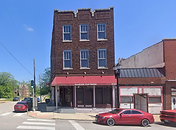
The Harlem Tap Room, located at 4161 Dr. Martin Luther King Drive is a historic establishment that has served as a cornerstone of the city's African American community since its inception in 1946. Founded by Ezell Nance Sr., the bar quickly became a gathering place for locals, offering a warm atmosphere, strong drinks, and a jukebox filled with soulful tunes.
Harlem Tap Room
The Ville, Northside, Riverview
Open to public / Not Open to public
EDUCATION

Harris-Stowe University is a historically black college in St. Louis, Missouri. It was also the first public teacher education institution west of the Mississippi River. Harris-Stowe was originally two separate institutions: Harris Teachers College and Stowe Teachers College, which were merged together in 1954 to form Harris Teachers College.
Harris-Stowe State College
Central Corridor: Mill Creek Valley & Midtown
Open to public / Not Open to public
Open to public
HEALTH

Homer G. Phillips Hospital was the only public hospital for African Americans in St. Louis from 1937 until 1955, when the city began to desegregate, and was the first teaching hospital west of the Mississippi River to serve the city's Black residents. By 1961, the hospital had trained the "largest number of Black doctors and nurses in the world." It was named for St. Louis lawyer and civil rights advocate Homer G. Phillips who helped plan it. The hospital was built a year after his death and renamed for him in 1942.
Homer G. Phillips Hospital
The Ville, Northside, Riverview
Open to public / Not Open to public
Open to public
CIVIL RIGHTS

Peter & Nancy Hudlin lived with their family at the 1400 block of Thirteenth Street, just south of the old Greyhound bus station, in a home used for the Underground Railroad. There he sheltered, fed and helped transport the runaway enslaved under nightfall. Working with Elijah Lovejoy, he carried them in crates to the Alton side of the river. Richard Hudlin Sr. was a respected writer, publisher, actor, and postmaster of Clayton, Missouri. His mother, Sarah, grew up in the family that risked their lives for freedom. Richard A. Hudlin, Jr. was a Sumner educator, Arthur Ashe's tennis coach, and civil rights advocate.
Hudlin Family Home
Downtown St. Louis
Open to public / Not Open to public
CIVIL RIGHTS

In March 1965, civil rights activist Ivory Perry and Ernest Gilkey staged a bold protest by disabling their truck and blocking traffic on a Highway 40 exit ramp during rush hour. The demonstration was intended to draw attention to the violent attacks on peaceful civil rights marchers in Alabama.
Ivory Perry Highway Protest
North Central City
Open to public / Not Open to public
Open to public
SPORTS

In the 1980s, Dickon Street between Jefferson Avenue and Webster was renamed James “Cool Papa” Bell Avenue in honor of Negro National League legend James Thomas Bell (1903–1991). A Mississippi native who moved to St. Louis at 16, Bell played professional baseball from 1922 to 1950 and was known for his lightning speed, once reaching second base on a bunt and rounding the bases in a record 13.1 seconds. He was inducted into the Baseball Hall of Fame in 1974.
James "Cool Papa" Bell Avenue
Central Corridor: Mill Creek Valley & Midtown
Open to public / Not Open to public
Open to public
EDUCATION

The J. Milton Turner School, initially called the Meacham Park School, opened in 1925 and served African American students ad families in the Meacham Park Subdivision, a predominantly African American neighborhood. The school serves as a reminder of the history of school segregation as well as the efforts of Black educators and influential Black leaders such as J. Milton Turner an enslaved person who became a U.S. foreign diplomat.
James Milton Turner School
Webster, Rock Hill, Crestwood, Kirkwood
Open to public / Not Open to public
🏠

Educator & diplomat James Milton Turner (1840-1915) was the 1st Black minister to Liberia. In 1866, he was appointed to teach in MO’s 1st tax-supported school for Black people. He was active in politics & his support of Ulysses S. Grant resulted in an appointment as minister resident & consul-general in Liberia. He was named on 3/1/1871. He was actually the 2nd Black person named since James W. Mason, nominated in Mar. 1870, never took his post.
James Milton Turner home
The Ville, Northside, Riverview
Open to public / Not Open to public
Not open to public (currently used for administrative purposes)
CIVIL RIGHTS

From August 30, 1963 until March 31, 1964, Jefferson Bank & Trust Company was the scene of a 7 month long demonstration organized by the St. Louis Chapter of the Congress of Racial Equality (CORE), aimed at forcing the bank to hire four black clerical workers.
Jefferson Bank & Trust Company (1st)
Central Corridor: Mill Creek Valley & Midtown
Open to public / Not Open to public
Not open to public
MUSIC

The Missouri School for the Blind, located on Delmar Boulevard (formerly Morgan Street), played a pivotal role in the early life of John William “Blind” Boone. When Boone enrolled at age nine, the school had only six African American students and strictly limited their access to music education. Despite being assigned to broom-making in the trade department, Boone’s passion for music couldn’t be contained—he found ways to practice piano and often snuck out at night to explore the city’s vibrant music halls. In 1906, the school relocated to its current address at 3815 Magnolia Avenue, where it remains today.
John William "Blind" Boone site - Missouri Institution of the Blind
Central Corridor: Mill Creek Valley & Midtown
Open to public / Not Open to public
Open to public
MUSIC

Josephine Baker (1906–1975) was born in St. Louis’s Mill Creek Valley and raised on Gratiot Street and later at 2632 Bernard Street. She attended Lincoln Elementary School and began performing on the streets for pennies outside the Booker T. Washington Theatre. Frustrated by the racism and limited opportunities she faced in St. Louis, Baker left the city as a teenager. Josephine remains an enduring symbol of artistic brilliance, global activism, and unshakable resistance to racial injustice.
Josephine Baker home (1)
Central Corridor: Mill Creek Valley & Midtown
Open to public / Not Open to public
Not open to public - DISPLACED
MUSIC

Josephine Baker (1906–1975) was born in St. Louis’s Mill Creek Valley and raised on Gratiot Street and later at 2632 Bernard Street. She attended Lincoln Elementary School and began performing on the streets for pennies outside the Booker T. Washington Theatre.
Josephine Baker home (2)
Central Corridor: Mill Creek Valley & Midtown
Open to public / Not Open to public
Not open to public - DISPLACED
EDUCATION

In 1974, the St. Louis Public Library broke with tradition by naming a new branch after Julia Davis (1891–1993)—a respected educator, historian, and lifelong advocate for African American history. Davis graduated from Dumas Elementary, Sumner High School, the Normal School, and Stowe Teachers College. She taught in the St. Louis Public Schools from 1913 to 1961, spending 35 years at Simmons Elementary. The original branch was located at 4660 Natural Bridge Avenue. On February 14, 1993, the Julia Davis Branch opened at its new and current location: 4415 Natural Bridge Avenue on land donated by Commerce Bank. Designed by architect Russell Lewis, the 15,000-square-foot building features a 125-seat auditorium and public access to educational software and computers. The Julia Davis Collection, previously housed at Central Library, was relocated to the branch, solidifying it as a vital center for research, learning, and cultural celebration.
Julia Davis Branch Library
The Ville, Northside, Riverview
Open to public / Not Open to public
Open to public
ART

Katherine Dunham (1910–2006) was a world-renowned performer, choreographer, and teacher who is widely regarded as one of the most influential figures in the development of modern dance. She attended the University of Chicago, where she studied anthropology, and later conducted groundbreaking research in the Caribbean and Brazil with the help of a Rosenwald Fellowship. In 1931, she founded her first school for the study of Black Caribbean dance in Chicago, an important milestone in the recognition of African and Afro-Caribbean dance traditions in the United States.
Katherine Dunham Museum
East St. Louis
Open to public / Not Open to public
Open to public
NEIGHBORHOODS

The City of Kinloch, Missouri, holds the distinction of being the first incorporated Black city in Missouri. Its incorporation on August 20, 1948, was shaped by a discriminatory real estate practice in which land was sold to white buyers at market value, who then resold it to Black families at inflated prices due to racially restrictive covenants that made it illegal to sell directly to African Americans.
Kinloch
Kinloch, Berkeley, Ferguson, Robertson, Black Jack
Open to public / Not Open to public
Open to the public - DISPLACED
EDUCATION

Opened in 1925, L’Ouverture Elementary School in Richmond Heights, Missouri, was established to serve Black students who had previously attended school in Webster Groves. Named after Haitian revolutionary leader Toussaint L’Ouverture, the school symbolized progress and empowerment for the local African American community
L'ouverture Elementary School (Brentwood)
Clayton, Richmond Heights, Frontenac, Brentwood
Open to public / Not Open to public
Not open to public - DISPLACED

🏠

Boxing champions Leon and Michael Spinks grew up in St. Louis, first in the Pruitt-Igoe housing project and later at Darst-Webbe. Both won Olympic gold medals in Montreal in 1976. Leon famously defeated Muhammad Ali in 1978 to win the WBA heavyweight title, while Michael won the world light heavyweight title twice and the IBF heavyweight title after defeating Larry Holmes. Michael retired with a record of 31-1 after a loss to Mike Tyson in 1988.
Leon & Michael Spinks home
South St. Louis, Carondelet, South County
Open to public / Not Open to public
Open to public - Under redevelopment
EDUCATION

This one-room Lincoln School opened in 1909 to serve Black students in the Maplewood-Richmond Heights School District. At the time, Missouri schools were segregated by race, and this facility was the district’s first designated school for African American children. The school's first teacher, Harvey J. Simms, named it after Lincoln Institute in Jefferson City, now known as Lincoln University. Before receiving the name “Lincoln Elementary,” the school was referred to as the “Colored School on Dale.”
Lincoln Elementary (old)
Open to public / Not Open to public
Not open to the public - DISPLACED
EDUCATION

In 1950, Lincoln High School moved from its Broadway location into this building, which now enrolls approximately 1,299 students in grades 9–12. Notable among its alumni is Olympic gold medalist Jackie Joyner-Kersee (born 1962), a championship-caliber track athlete.
Lincoln High School (new)
East St. Louis
Open to public / Not Open to public
Not open to the public
EDUCATION

When it was founded in 1886, Lincoln School was a combined elementary and high school for Black students, located at 240 N. Sixth Street and St. Louis Avenue. A 1902 school census shows that 287 students were enrolled that year, and the school had an 89 percent attendance rate. Minnie C. Scott, Mary E. Scott, and Fannie Edwards made up the first class of high school graduates in 1894. As Principal B.F. Bowles wrote in a 1901 letter to the East St. Louis superintendent, the majority of graduates from the high school department became teachers.
Lincoln High School (old)
East St. Louis
Open to public / Not Open to public
Not open to the public
EDUCATION
Lincoln University of Missouri, located in Jefferson City, was established in 1866 by African American Civil War veterans of the 62nd and 65th United States Colored Infantry. It stands as the only HBCU founded by Black veterans. These soldiers, many of whom were formerly enslaved, pooled their resources to create an institution that would serve the educational needs of freed African Americans.
Lincoln University
The Ville, Northside, Riverview
Open to public / Not Open to public
EDUCATION

Lloyd Lionel Gaines was born in 1911 in Mississippi and moved with his family to St. Louis at the age of 14. A bright and determined student, Gaines graduated at the top of his class in high school and went on to earn his bachelor’s degree from Lincoln University in Jefferson City, one of the few higher education options available to Black students in the state at the time. In 1936, Gaines made history by applying to the University of Missouri School of Law, marking the first time a Black student had attempted to gain admission to the state’s flagship law school. His application was rejected solely because of his race.
Lloyd Lionel Gaines home
North Central City
Open to public / Not Open to public
Not open to public - DISPLACED

CIVIL RIGHTS

Lynch, a well-known character in his day, engaged in the slave trade in St. Louis for many years. First he ran a slave market on Locust Street, midway between Fourth and Fifth Streets. When his business outgrew those quarters, he purchased the Fifth and Myrtle site in 1859, installing barred windows, bolts, and locks to convert it to a secure prison.
Lynch's Enslaved Market
Downtown St. Louis
Open to public / Not Open to public
Not open to public - DISPLACED
CIVIL RIGHTS

The Martin Luther King, Jr., Memorial Bridge spans the Mississippi River between St. Louis and East St. Louis. Constructed in 1951 as the Veterans Bridge, it was renamed in 1972 for the Baptist clergyman and civil-rights activist who was slain in 1968. The bridge connects with Dr. Martin Luther King Drive, both in St. Louis and in East St. Louis. In 1972, Easton Avenue and part of Franklin Avenue were renamed to honor King.
Martin Luther King Bridge
Downtown St. Louis
Open to public / Not Open to public
Open to public
CIVIL RIGHTS

Martin Luther King, Jr. memorializes the famous civil rights leader who died in 1968. The neighborhood association of North St. Louis City initiated the project to mark the beginning of a redevelopment program planned for the area. In the statue, the Rev. Martin Luther King, Jr. stands with his right hand outstretched, as if giving an impassioned speech on civil rights or proclaiming the good news with a stirring sermon. His other hand clutches a book, perhaps the Bible or a book on the US Constitution declaring the equality of men. The slightly stylized rendition of King gives the statue its power and infuses it with a unique artistic quality.
Martin Luther King, Jr Statue
North Central City
Open to public / Not Open to public
Open to public
CIVIL RIGHTS

As a major city in a slave state just across the Mississippi River from the free state of Illinois, St. Louis was a pivotal point in the Underground Railroad. On the night of May 21, 1855, in the area that is now part of the Mississippi Greenway: Riverfront Trail north of the Merchant’s Bridge, Mary Meachum attempted to help a small group of enslaved people cross the Mississippi River to Illinois where slavery was outlawed. However, enslavers and law enforcement officials caught at least five of the enslaved people and arrested Mary for her participation in the plot. She was charged in criminal court for helping the “fugitives” escape. In 2001, the National Park Service recognized the site as part of the Underground Railroad Network to Freedom.
Mary Meachum Freedom Crossing
Downtown St. Louis
Open to public / Not Open to public
Open to public
🏠

Actress, author, and educator Maya Angelou (1928–2014) was born Marguerite Johnson to Bailey and Vivian Baxter Johnson. At the time of her birth, the family was living in St. Louis on Hickory Street. In her 1970 autobiography "I Know Why the Caged Bird Sings", Angelou described her childhood. After her parents' marriage disintegrated, she and her mother were sent from their California home to live with their paternal grandmother, the owner of a general merchandise store in Stamps, Arkansas.
Maya Angelou home
South St. Louis, Carondelet, South County
Open to public / Not Open to public
Not open to public - DISPLACED
MUSIC

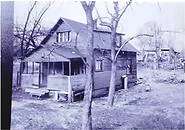
In 1927, the family moved again to 1112 Milnor Avenue in Alton, Illinois and in 1930 they purchased a home at 1701 Kansas Avenue in East St. Louis. Today, the House of Miles East St. Louis (HOME) offers tours and educational programs in their recently restored home.
Miles Davis home
East St. Louis
Open to public / Not Open to public
Open to public
NEIGHBORHOODS

Mill Creek Valley was a vibrant and historically significant African American neighborhood in central St. Louis, located between 20th Street and Saint Louis University. Originally developed in the 18th century along Mill Creek, the area grew into a major industrial and residential center.
Mill Creek Valley
Central Corridor: Mill Creek Valley & Midtown
Open to public / Not Open to public
Not open to the public - DISPLACED
FINANCE
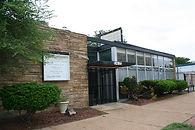
The New Age Savings and Loan Association of St. Louis was founded in 1915 by William L.
Frank and was Missouri's first Black-owned financial institution. The association was key in
financing homes, churches, and businesses for St. Louis’s African American community.
New Age Federal Savings and Loan
The Ville, Northside, Riverview
Open to public / Not Open to public
EDUCATION
As enrollment grew, the limitations of the small one-room schoolhouse (see Lincoln Elementary) on Dale Avenue became apparent. In response, a larger facility, "New Lincoln", was constructed in 1933. The two schools were then used in tandem to educate Black students in the district. The original building housed grades 1 through 4, while the newer facility was home to grades 5 through 7. Kindergarten was added later.
New Lincoln Elementary School
Clayton, Richmond Heights, Frontenac, Brentwood
Open to public / Not Open to public
Not open to public - DISPLACED

Established on the Native American village and burial mounds in North St. Louis, after Col. John O'Fallon purchased 600 acres of land in the area for his empire, which included at least 83 enslaved men and women who were forced to support his business operations. In the 1850s, he built a 4 story limestone and red brick summer mansion on the northeast corner overlooking the Mississippi River and named it Athlone, after his hometown in Ireland. The O'Fallon Mansion had 40 to 50 rooms with a large entryway.
O'Fallon Park
Open to public / Not Open to public
Open to the public
CIVIL RIGHTS

Enslaved people were auctioned from its steps in estate settlements, while one man's suit for freedom helped plunge the country into Civil War. The Old Courthouse was the site of over 300 suits for freedom, but one gained notoriety. In 1847, Dred Scott, with his wife Harriet, sued for, and were granted, their freedom.
Old Courthouse
Downtown St. Louis
Open to public / Not Open to public
Open to public
BURIAL GROUNDS

The· Des Peres Presbyterian Church, constructed in 1834, is significant for its place as Missouri's oldest stone Protestant church building and its first pastor, abolitionist minister Elijah Parish Lovejoy. Because of his strong stance against slavery, a pro-slavery mob shot and killed Lovejoy in 1837.
Old Des Peres Meeting House and Cemetery
Clayton, Richmond Heights, Frontenac, Brentwood
Open to public / Not Open to public
Open to public
EDUCATION

This one-room school opened in 1909 for the black students in the Maplewood-Richmond Heights School District. The school's first teacher, Harvey J. Simms, named it for Lincoln Institute (now Lincoln University in Jefferson City). Before it became Lincoln Elementary, the school was known as the "Color School on Dale." It was sold in 1955 and its students were transferred to New Lincoln Elementary School.
Old Lincoln Elementary School
Clayton, Richmond Heights, Frontenac, Brentwood
Open to public / Not Open to public
Not open to public - DISPLACED
CIVIL RIGHTS

The old St. Louis County Courthouse, built in 1878, was connected to the adjoining jail by a second-floor corridor known as "the Bridge of Sighs," where condemned men were hanged.
Old St. Louis County Courthouse
Clayton, Richmond Heights, Frontenac, Brentwood
Open to public / Not Open to public
Not open to public - DISPLACED
FINANCE

Formed in 1923, the People's Finance Corporation served Black St. Louisans who were shut out of White-led financial institutions. In 1926, the Corporation opened the five story People's Finance Building at the corner of Jefferson and Market Avenues. This building anchored the Mill Creek Valley neighborhood, just west of downtown St. Louis, as a hub of Black community and commerce. Throughout the years, a large number of Black professionals conducted business in the space, as well as serving as the headquarters for an array of Black unions and civil rights organizations. The building was torn down by the city as part of its urban renewal plan in 1954.
People's Finance Corporation
Central Corridor: Mill Creek Valley & Midtown
Open to public / Not Open to public
HEALTH

The People's Hospital was organized as a small private hospital in 1894. It was incorporated under the name Provident Hospital and renamed in 1918. For many years it was the only place where black physicians and surgeons could treat private patients. Before moving to the Locust Street site the hospital was located at 3447-49 Pine Street. In 1898, a nurses program for black women began there. At its peak it was a 75 bed short-term general hospital. It closed in 1978.
People's Hospital
Central Corridor: Mill Creek Valley & Midtown
Open to public / Not Open to public
EDUCATION

Established in 1917 by entrepreneur Annie Turnbo Malone, Poro College was a pioneering institution that combined beauty education with business training, empowering thousands of African American women and serving as a cultural hub in St. Louis's Ville neighborhood.
Poro College
The Ville, Northside, Riverview
Open to public / Not Open to public
Not open to public
NEIGHBORHOODS

The Wendell O. Pruitt Homes and William Igoe Apartments, known together as Pruitt–Igoe, were joint urban housing projects first occupied in 1954. The complex of 33 eleven-story high rises was designed in the modernist architectural style by Minoru Yamasaki. At the time of opening, it was one of the largest public housing developments in the country. It was constructed with federal funds on the site of a former slum as part of the city's urban renewal program. Despite being legally integrated, it almost exclusively accommodated African Americans.
Pruitt-Igoe Housing Project
The Ville, Northside, Riverview
Open to public / Not Open to public
Not open to public - DISPLACED
BURIAL GROUNDS

Quinette Cemetery, established in 1866 in Kirkwood, Missouri, is one of the oldest African American cemeteries west of the Mississippi. Donated by Moses and Nancy Quinette, the land became the final resting place for formerly enslaved individuals and their descendants. Today, it stands as a powerful testament to Black resilience and community heritage.
Quinette Cemetery
Webster, Rock Hill, Crestwood, Kirkwood
Open to public / Not Open to public
Open to public

NEIGHBORHOODS
At one time, the African American community in Richmond Heights and Brentwood flowed into each other along Eager Road. Many of the African Americans who moved to both communities came to work in the Evans-Howard brickyard in Brentwood and service jobs offered by wealthy families in nearby subdivisions in the early 1900s.
Richmond Heights
Clayton, Richmond Heights, Frontenac, Brentwood
Open to public / Not Open to public
Not open to public - DISPLACED
NEIGHBORHOODS

The Robertson neighborhood, once a thriving African American community near Hazelwood, MO, was displaced by airport expansion and development projects, erasing generations of Black heritage and community life. The Robertson Fire Protection District was started by the black residents of Robertson as a volunteer bucket operation, and individual residents were taxed for service. It provided protection for much of the area around Robertson. In its early years, the firehouse also served as a movie theater.
Robertson Neighborhood & Firehouse
Kinloch, Berkeley, Ferguson, Robertson, Black Jack
Open to public / Not Open to public
Not open to public - DISPLACED
MUSIC

The original Rosebud Cafe was located downtown at 2220-2222 Market Street. A New Rosebud Cafe modeled after the original is now part of the Scott Joplin House State Historic Site at 2658 Delmar Boulevard.
Rosebud Cafe
Central Corridor: Mill Creek Valley & Midtown
Open to public / Not Open to public
Not open to public - DISPLACED (see Scott Joplin House)
MUSIC

An authentic player piano fills the air with Scott Joplin melodies as you walk through the historically appropriate modest flat on Delmar Boulevard where Joplin rented a room in 1902. Scott Joplin House State Historic Site, which stands as a testimony to his talent and hard work, also includes museum exhibits that interpret Joplin’s life.
Scott Joplin House
Central Corridor: Mill Creek Valley & Midtown
Open to public / Not Open to public
Open to public
🏠
In October 1941, Scovel Richardson (1912–82), a Black associate professor at Lincoln University School of Law, bought this property, which was covered by a restrictive covenant that did not expire until December 1942.
Scovel Richardson
The Ville, Northside, Riverview
Open to public / Not Open to public
CIVIL RIGHTS

Blanche Kelso Bruce (1841-98), who later became a senator from Mississippi, was born a slave in Virginia. He moved to rural Missouri in the early 1850s with the family of his master, William Perkinson. By the mid-1850s he had come to St. Louis, where he worked along the levee. He later attended Oberlin College, in Ohio, then returned to St. Louis after the Civil War as an employee on the steamboat Columbia, which sailed between St. Louis and Council Bluffs, Iowa.
Sen Blanche Kelso Bruce
Downtown St. Louis
Open to public / Not Open to public
Not open to public - DISPLACED
This building houses The Sentinel, a weekly newspaper with a circulation of 20,000 which was founded in 1968 by Howard Woods, it's publisher and editor. He initiated the "Yes, I Can" dinner as an annual charity event and fundraiser for the Sentinel in 1976. Upon the death of her husband, Jane Woods became the publisher of the newspaper and her son-in-law, Michael Williams, its editor.
Sentinel newspaper
Central Corridor: Mill Creek Valley & Midtown
Open to public / Not Open to public
CIVIL RIGHTS

The Shelley Home was a Black family’s residence that became central to a landmark 1948 U.S. Supreme Court case challenging restrictive covenants—agreements that prevented African Americans from buying or renting homes in certain neighborhoods. The case, Shelley v. Kraemer, declared these covenants unenforceable, marking a major victory against housing segregation.
Shelley home
The Ville, Northside, Riverview
Open to public / Not Open to public
Not open to public
EDUCATION

Also known as Elleardsville School for Colored Children #8, Colored School #8, Simmons Middle School, and Simmons School
Simmons Colored School is a historic building and a former African American school in The Ville neighborhood. It served as a historically segregated African American elementary school and middle school from 1898 until 1930. The building served as the Stowe Teachers College campus, an African American normal school and junior college from 1930 until 1940.
Simmons Elementary School
The Ville, Northside, Riverview
Open to public / Not Open to public
Not open to public
SPORTS

Charles "Sonny" Liston (1932–1970) was a World Heavyweight Champion and an Arkansas native who moved to St. Louis as a child. At age 18, he was arrested for robbing a service station and imprisoned at the Missouri State Penitentiary, where he learned to box. Upon his release, he was placed in the custody of Frank Mitchell, owner of the St. Louis Argus, who lived on Labadie Avenue.
Sonny Liston
The Ville, Northside, Riverview
Open to public / Not Open to public
Not open to public
BUSINESS

The St. Louis Argus Publishing Company purchased a two-story building at 2341 Market Street and remodeled it for the business. The presses and equipment of the Osborne Printing Co. were acquired, and a job printing plant installed. The business soon outgrew these limited quarters.
St. Louis Argus (1st)
Central Corridor: Mill Creek Valley & Midtown
Open to public / Not Open to public
Not open to public - DISPLACED
BUSINESS

In 1922, 2312-14-16 Market Street was purchased. The space had been used by the Toomy and Volland Scenic Painting Company. The new Argus building opened on March 30, 1923.
St. Louis Argus (2nd)
Central Corridor: Mill Creek Valley & Midtown
Open to public / Not Open to public
Not open to public - DISPLACED


SPORTS

The St. Louis Cardinals Hall of Fame Museum, located in Busch Stadium, the home of the St. Louis Cardinals baseball team, honors professional, semiprofessional, and amateur baseball players.
St. Louis Cardinals Hall of Fame Museum
Downtown St. Louis
Open to public / Not Open to public
Open to public
CIVIL RIGHTS

he St. Louis branch of the NAACP was organized in 1914 following a mass meeting held at St. Paul African Methodist Episcopal Church. J.E. Springer (1875–1939), one of the national founders of the NAACP, addressed the gathering. The meeting generated such strong interest that a second meeting was held the next morning at Union Memorial Methodist Church. At that gathering, attendees agreed to form a permanent local organization and applied for a charter, which was approved by the national office in March 1914. The St. Louis branch launched with 625 charter members, including prominent figures such as James Milton Turner, Charlton H. Tandy, and Annie Turnbo Pope Malone.
St. Louis NAACP
Pagedale, Wellston, Beverly Hills, Hillsdale, U City
Open to public / Not Open to public
Open to public
CIVIL RIGHTS

In June 1833, the Reverend Elijah Parish Lovejoy (1802-37), newly graduated from Princeton Theological Seminary, returned to St. Louis, where he had previously edited the St. Louis Times. This time, he became editor of a Presbyterian newspaper, the St. Louis Observer.
St. Louis Observer
Downtown St. Louis
Open to public / Not Open to public
Not open to public - DISPLACED
HEALTH

In 1933, the Sisters of St. Mary opened their previously all-white hospital, founded in 1877, to Black physicians and patients. St. Mary’s became a vital center for the professional education of African American doctors and nurses, including a nursing school established that same year. Postgraduate training for Black physicians was provided in partnership with St. Louis University School of Medicine. The hospital closed in 1966.
St. Mary's Infirmary
South St. Louis, Carondelet, South County
Open to public / Not Open to public
Not open to public - DISPLACED
RELIGION

In 1831 families enslaved by St. Louis University were made to labor at the Jesuit St. Stanislaus Seminary and Farm in Florissant, most of whom had been forced from the Jesuit's White Marsh plantation in Maryland to Missouri in 1823 and 1829.
St. Stanislaus Seminary & Farm
Florissant, Hazelwood
Open to public / Not Open to public
EDUCATION
The Stafford Colored School in the Moore School District (now a part of the Parkway School District) opened around the turn of the century, serving students both from the immediate vicinity and from neighboring communities. The school closed in 1946 and the building became a residence. Its students were sent to Webster Groves on a tuition basis.
Stafford Colored School
Ballwin, Chesterfield
Open to public / Not Open to public
EDUCATION

In 1890, the St. Louis school system established Sumner Normal School to train black teachers. In 1929, its name was changed to Stowe Teachers College, after author Harriet Beecher Stowe, whose novel, Uncle Tom's Cabin, had promoted the abolitionist cause in the antebellum United States. From 1930 until 1940, Stowe Teachers College existed in the former Simmons Colored School campus.
Stowe Teachers College
The Ville, Northside, Riverview
Open to public / Not Open to public
Not open to public
EDUCATION
When Sumner High School opened in 1875 it was the first high school for African Americans anywhere west of the Mississippi River. Since then, the school has been moved twice, with the current location moved to in 1908. The school resided in a former school on Eleventh and Spruce used by the city as designated for St. Louis’ Black residents before moving to Fifteenth and Walnut.
Sumner High School (1st) 1875
Downtown St. Louis
Open to public / Not Open to public
Not open to public - DISPLACED
EDUCATION
The second location for Sumner High School was in the Mill Creek Valley neighborhood from 1894 until the early 20th century before moving to the Ville neighborhood.
The school had previously resided in a former school on Eleventh and Spruce used by the city as designated for St. Louis’ Black residents before moving to Fifteenth and Walnut.
Sumner High School (2nd) 1895
Central Corridor: Mill Creek Valley & Midtown
Open to public / Not Open to public
EDUCATION

With continued support of the community, Sumner High School continued to grow and develop into one of the best ranked public schools for Black students during the 20th century.
It moved to 4248 Cottage Avenue St. Louis, MO 63113, in the Ville neighborhood in 1908 and featured famous alumni like Arthur Ashe, Chuck Berry, and Tina Turner.
Sumner High School (3rd) 1910
The Ville, Northside, Riverview
Open to public / Not Open to public
Open to public
EDUCATION
In 1890, the St. Louis school system established Sumner Normal School to train black teachers. In 1929, its name was changed to Stowe Teachers College, after author Harriet Beecher Stowe, whose novel, Uncle Tom's Cabin, had promoted the abolitionist cause in the antebellum United States.[4] from 1930 until 1940, Stowe Teachers College existed in the former Simmons Colored School campus.
Sumner Normal School
The Ville, Northside, Riverview
Open to public / Not Open to public
Not open to public – DISPLACED
EDUCATION

Sumner Teachers College was a historically Black institution in St. Louis dedicated to training African American educators. It played a vital role in providing higher education opportunities during segregation and helped shape generations of Black teachers in Missouri.
Sumner Teachers College
The Ville, Northside, Riverview
Open to public / Not Open to public

Charlton Tandy moved to St. Louis in 1857 at the age of 21. In 1879, Tandy was the first St. Louisan to aid the Exodusters, African American migrants who were leaving the post-Reconstruction South for homes in Kansas.
After the penniless refugees arrived in St. Louis from homes in Louisiana and Mississippi, Tandy organized the Colored Refugee Relief Board. For the next two years the group fed, clothed, housed, and bought passage to Kansas for approximately 10,000 migrants. In addition, Tandy publicized the Exodusters’ plight, by speaking in New York, Boston, and other cities, meeting with President Rutherford B. Hayes, and testifying before Congress. Tandy died in St. Louis in 1919. In 1938 Charlton Tandy Community Center and Park in St. Louis was named for him.
Tandy Community Center
The Ville, Northside, Riverview
Open to public / Not Open to public
Open to public
MUSIC

The Castle was an imposing three-story brick building, painted white, and the meaning of the phrase "storming the Castle" was known to most of the adult males of St. Louis. It was located a short walk from Tony Faust's elegant restaurant and the Southern Hotel bar.
The Castle Club "Maison De Joie"
Downtown St. Louis
Open to public / Not Open to public
Not open to public - DISPLACED
EDUCATION

By the late 1840s, several schools and many classes for blacks were being conducted in church basements, among them the Chambers Street Baptist Church, the First African Baptist Church, St. Paul African Methodist Episcopal Church, and the Central Baptist Church. The Sisters of St. Joseph also ran a school for the instruction of black Catholic girls.
The Freedom School
Downtown St. Louis
Open to public / Not Open to public
Not open to the public
🏠

Most of the Reed descendants have moved away or passed on, but in 1915, Reed’s daughter and her husband, Williaus Carter Sr., built the family homestead at 9633 Baltimore Avenue.
The Reed home and farm
Creve Coeur, Elmwood, Overland, MH, Breckenridge
Open to public / Not Open to public
Not open to public - Private home
NEIGHBORHOODS

During the mid-1800s, Charles Elleards, a horticulturist, built a two-story brick home on Goode Avenue (now Annie Malone Drive) and established a large nursery on his estate. The nursery stretched from Goode to Newstead Avenue, and from Old St. Charles Rock Road (later renamed Dr. Martin Luther King Jr. Drive) to Cote Brilliante Avenue. The area became known as "Elleardsville," which was then shortened to "the Ville."
The Ville
The Ville, Northside, Riverview
Open to public / Not Open to public
Open to public
MUSIC

A vibrant two‑story mural at 4157 Dr. Martin Luther King Drive honors St. Louis native Tina Turner near her childhood home and Sumner High School. It celebrates her early years, including performances at Club Imperial, and continues to inspire the Ville neighborhood
Tina Turner Mural
The Ville, Northside, Riverview
Open to public / Not Open to public
Damaged by tornado
EDUCATION

Turner Middle School (formerly the Stowe Teachers’ College Building) is located along Tandy Park in The Ville neighborhood. The school was named for scientist and educator Charles Henry Turner (1867-1923).
Turner Middle School
The Ville, Northside, Riverview
Open to public / Not Open to public
Not open to public
🏠

Ulysses S. Grant's connection to Black history is intricately linked to his residence at White Haven during the 1850s. Grant was raised in an anti-slavery household and his time at White Haven exposed him to the institution of slavery firsthand. His father-in-law, Colonel Frederick Dent, owned a plantation that relied heavily on enslaved labor. Grant himself acquired an enslaved man named William Jones, whom he freed in 1859, demonstrating a personal stand against slavery . However, Grant's involvement in the "hiring out" system—where enslaved individuals were rented out for labor—illustrates the complexities of his relationship with slavery .
Ulysses S Grant National Historic Site
South St. Louis, Carondelet, South County
Open to public / Not Open to public
Open to public

EDUCATION

Built: 1931; Demolished: January 2003 - Vashon High, the city's second black high school, transferred to this building in 1963, following diminishing enrollment at a previous location.
Vashon High School (1963)
Central Corridor: Mill Creek Valley & Midtown
Open to public / Not Open to public
Not open to the public
NEIGHBORHOODS

Westland Acres, a historic African American community in west St. Louis County near Chesterfield, was founded in 1868 by formerly enslaved William West and his wife Polly, who purchased 343 acres of land. Today, over 50 West family members still live in the area. The community is home to the John W. West Cemetery, a rebuilt Union Baptist Church, and a former segregated schoolhouse used by Black students until 1963.
Westland Acres
Ballwin, Chesterfield
Open to public / Not Open to public
Open to the public