
A community dedicated to gathering, nurturing, learning and building.
Kinloch, Berkeley, Ferguson, Robertson, Black Jack
Kinloch
Kinloch, MO
Open to public / Not Open to public
Open to the public - DISPLACED

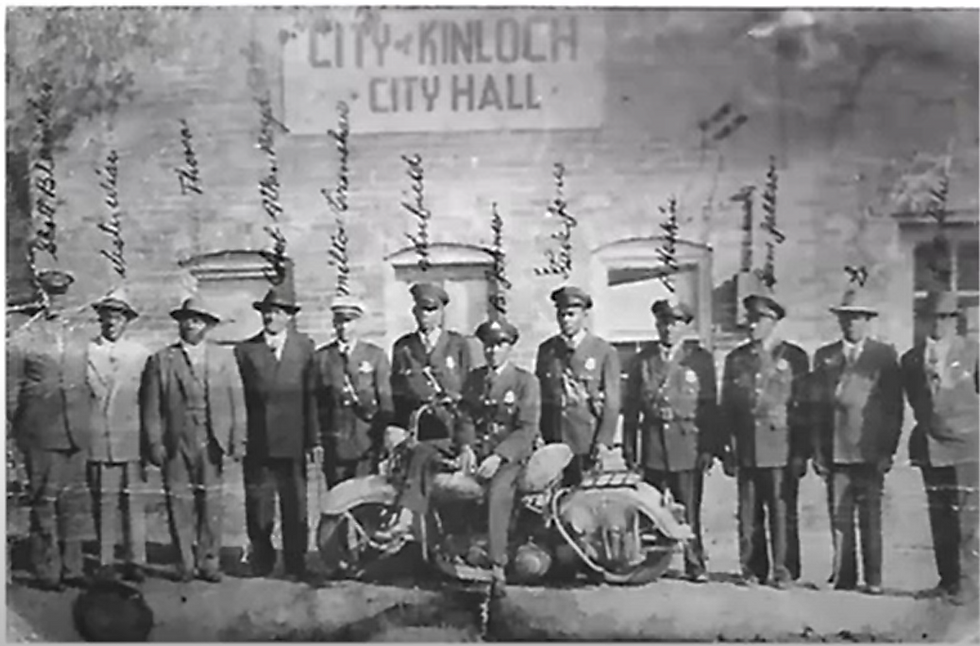
The City of Kinloch, Missouri, holds the distinction of being the first incorporated Black city in Missouri. Its 6,000 resident incorporation on August 20, 1948, was shaped by a discriminatory real estate practice in which land was sold to white buyers at market value, who then resold it to Black families at inflated prices due to racially restrictive covenants that made it illegal to sell directly to African Americans.
Kinloch was first developed in the 1890s as a white commuter suburb of St. Louis County, originally named Kinloch Park. Despite being designed as an exclusive white neighborhood, land was also made available to Black workers employed in the area, eventually leading to a thriving Black community. Over time, Kinloch grew into a self-sustaining city governed entirely by African Americans. The community featured its own city government, school board, churches, libraries, parks, theaters, restaurants, and small businesses, and undertook numerous public improvement projects.
Racial segregation defined Kinloch from the start. Black residents were initially restricted to the southern part of the community and excluded from the local white school. Early on, families had to send their children to nearby Ferguson for schooling. This changed in 1913 with the opening of Paul Laurence Dunbar Elementary, the first school for Black children in Kinloch. The school system expanded with the addition of Vernon School in 1927, Kinloch High School in 1936, and Our Lady of the Angels Elementary in 1952. Despite the Supreme Court's 1954 decision mandating school desegregation, Kinloch’s schools remained racially divided.
Although the one-room frame Vernon School opened for black children in 1885, it closed a few months later. Black children in the Kinloch area traveled to Normandy to attend the school opened at Lucas and Hunt in 1886. The Vernon School, which moved to a number of locations in the area, served black children until the formation of the Kinloch School District in 1902, and its building remained in use as an all-black school in the Ferguson District until it was closed in 1967. When whites in the area split to form a separate school district in 1902, the Scudder Avenue School became Kinloch’s elementary school. A second elementary school, Dunbar, was opened in 1914. High school students attended Sumner in St. Louis City until Kinloch High School opened in 1937. In the mid-1970s, to further integrate education, both the Kinloch and the white Berkeley school districts were annexed into the Ferguson-Florissant School District. Kinloch students were also served by Holy Angels (now Our Lady of the Angels) Elementary School which opened in 1931.
As the Black population steadily grew between 1920 and 1937, white residents separated themselves by establishing the city of Berkeley, Missouri, which included a new, separate school district. This split deprived Kinloch of resources and significantly affected its financial stability. Later, as part of court-ordered efforts to desegregate schools across St. Louis County, Kinloch students were bused into other districts, even while their local schools remained segregated.
Kinloch's decline began in the 1980s, when St. Louis Lambert International Airport initiated a property buyout program in anticipation of an airport expansion. Kinloch lost a large amount of its property when the city of St. Louis began buying out land as part of a noise-abatement program. This process, along with other challenges, contributed to a decline in the city’s social and economic conditions. Between 1990 and 2000, more than 80% of the population was displaced due to these buyouts. From 1980 to 2020, Kinloch saw its numbers shrinking by approximately 94%, from 4,455 residents to just 263, according to Census data. Ultimately, the planned expansion never materialized, and the land acquired for it was left vacant and neglected. This mass displacement devastated the community, leaving it vulnerable to economic hardship, crime, and environmental hazards like illegal dumping.
Once a vibrant city with a population nearing 11,000, as Kinloch was reduced to fewer than 300 residents by 2010, streets became lined with abandoned buildings, and vital infrastructure deteriorated. Churches, homes, and businesses that had long served the community were lost.
Yet, Kinloch’s story is not only one of loss. It remains a symbol of Black self-governance and resilience. The St. Louis Economic Development Partnership is collaborating with the City of Kinloch, Lambert Airport, St. Louis County, St. Louis City, community organizations, and residents to address years of illegal dumping. Large-scale community cleanups are planned for 2025.
In addition, St. Louis County Parks is investing in the revitalization of Kinloch Park, a beloved gathering space, with over $2.4 million in grants and donations secured for its renovation. Fundraising continues to close the remaining funding gap.
Despite its challenges, Kinloch's cultural legacy remains strong. Notable figures who hail from Kinloch include political activist Dick Gregory, actress Jenifer Lewis, Congresswoman Maxine Waters, and recording artists Ann Peebles and Huey.
Kinloch stands as a powerful example of the long-term effects of racial exclusion and disinvestment, but also as a testament to the strength and spirit of Black communities in Missouri and beyond.
SOURCE: The historical information presented on this page is adapted with permission from Discovering African American St. Louis: A Guide to Historic Sites by Dr. John A. Wright, Sr. We are honored to share his invaluable research and historical insights, made available through the generous consent of Dr. Wright and the Missouri Historical Society Press. Their dedication to preserving and celebrating the rich legacy of Black St. Louis is a gift to our community—a testament to those who came before us and a guide for those who walk the path forward.

COMMUNITY CONTACT
No affiliations
Kinloch, MO
OTHER SOURCES
ADDITIONAL RESOURCES COMING SOON!