

A community dedicated to gathering, nurturing, learning and building.
O'Fallon Park
1955 Adelaide Ave
Open to public / Not Open to public
Open to the public
While other parks in the late 1800s were built for sports and fairgrounds, O'Fallon Park was intended more for leisure.
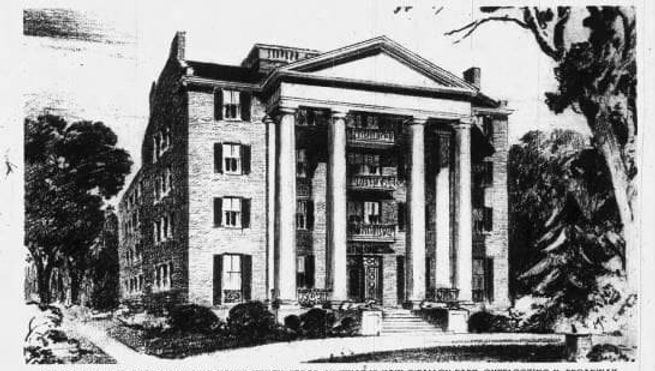
Established on the Native American village and burial mounds in North St. Louis, after Col. John O'Fallon purchased 600 acres of land in the area for his empire, which included at least 83 enslaved men and women who were forced to support his business operations. In the 1850s, he built a 4 story limestone and red brick summer mansion on the northeast corner overlooking the Mississippi River and named it Athlone, after his hometown in Ireland. The O'Fallon Mansion had 40 to 50 rooms with a large entryway. He had another home at 9th & Franklin, built in 1820.
During construction of the home, his enslaved workers carted away many loads of human bones, arrow heads, utensils, and stone axes. Colonel John O'Fallon reported that, "in excavating the foundations, human bones by the cart-load, with stone axes and arrow-heads in great numbers, were taken out." This has led many to believe that the hills are actually sacred burial grounds. At the time, the artifacts were not cherished and children and adults picked them out of the dumping grounds, played with them for a while and then threw them away. Other relics were tossed aside, lost or thrown away as of no value. Soil specimens were collected at the site in 1977 during an archaeological survey by Washington University.
The rest of the park has not been excavated.
In 1875, in an effort to appease neighborhood residents who didn't want to travel all the way to Forest Park, the City bought 166 acres of the land from his descendants and created a scenic park for drives and picnics. There was also an observation tower offering beautiful views of the river, a deer pen, horses, and horse stables. The lake was added in the 1890s. To keep the grass low, sheep were allowed to graze for free along with the horses, and there were once orchards where the tennis courts are now. There was also a large natural spring that gushed at the southeast of the park, under what is now known as the "Walk". It formed from the Ginngrass creek that led to the river and furnished drinking water for the neighborhood and horses nearby. The water was eventually detoured into sewage pipes.
Around 9pm one summer night of 1875, the mansion was partially destroyed by fire. It was being used as an orphanage at the time and all of the children escaped unharmed. It was temporarily repaired but the Park Commissioner decided to remove it the following year. Early St. Louisans recalled seeing a statue of a Sioux Indian Chief standing at the site, but no one knew what happened to it. In 1893, the park Commissioner intended to build a shelter where the mansion had been.
Next to the mansion was a pagoda, used on the weekends for band concerts, dancing and picnics. In 1901, the park was proposed along with Carondelet as a site for the Worlds Fair. But by the 1960s, Highway 70 was paved over 40 acres, then being used for athletic fields. The last boat rides were in 1970.
In 2020, the boathouse underwent plumbing, roof, and foundational repairs, and additional plans are slated to reintroduce boat rides. The students of Yeatman Middle School, the parks commissioner and the Mayor's office were asked for input on the new colors. Their recent video on the City of St. Louis website says they are working in partnership with the Missouri Department of Conservation in an effort to restore natural habitats, clean the lake and trails, remove invasive species, and plant new wildlife.
SOURCE: The historical information presented on this page is adapted with permission from Discovering African American St. Louis: A Guide to Historic Sites by Dr. John A. Wright, Sr. We are honored to share his invaluable research and historical insights, made available through the generous consent of Dr. Wright and the Missouri Historical Society Press. Their dedication to preserving and celebrating the rich legacy of Black St. Louis is a gift to our community—a testament to those who came before us and a guide for those who walk the path forward.

COMMUNITY CONTACT
No affiliations
1955 Adelaide Ave